
Colorado is one of the fastest-growing EV markets in the country. Between aggressive state incentives, rising utility rates, and strong EV adoption along the Front Range, businesses that combine EV charging with solar are gaining a real financial edge.
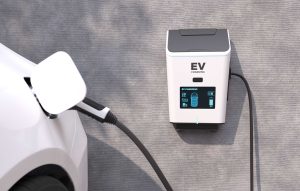
EV Charging Is a Customer Magnet in Colorado
Colorado ranks among the top states for EV adoption per capita. According to the Colorado Energy Office, EV registrations have grown rapidly year over year, especially in metro areas like Denver, Boulder, Fort Collins, and Colorado Springs.
According to the Colorado Energy Office, EV registrations have surged year over year, especially in metro areas like Denver, Boulder, Fort Collins, and Colorado Springs.
Why this matters for businesses:
-
EV drivers actively choose destinations with charging
-
Retail centers and mixed-use properties with chargers gain a competitive edge
-
Charging availability influences where people shop, eat, and spend time
A widely cited MIT study published in Nature Communications found that retail areas with public EV chargers experienced measurable increases in customer spending, with the strongest impact closest to the chargers. While the study analyzed national data, the results are especially applicable to high-EV states like Colorado.
Translation for Colorado businesses:
More EVs + limited charging = more opportunity to capture foot traffic.
Longer Dwell Time = Higher Revenue for Retail
Commercial charging data from ChargePoint shows that:
-
Level 2 charging sessions average 60–75 minutes
-
Typical retail visits last 20–30 minutes
-
EV charging increases dwell time by 30–50 minutes
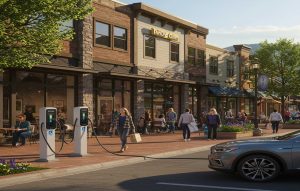
In Colorado’s walkable retail districts, think downtown Boulder, LoDo, RiNo, Old Town Fort Collins, this additional dwell time directly translates into:
-
Higher food and beverage sales
-
More shopping per visit
-
Increased customer loyalty
For retailers, EV charging isn’t just infrastructure, it’s a revenue multiplier.
Solar Solves the Colorado Utility Cost Problem
Colorado electricity rates have risen steadily, and demand charges are a growing concern for commercial properties.
According to the National Renewable Energy Laboratory (based in Golden, Colorado):
-
EV fast charging can increase peak demand by 200% or more
-
Peak demand, not total usage, often drives commercial electric bills
-
Solar paired with EV charging significantly reduces peak demand exposure
NREL’s Colorado-based modeling shows that on-site solar is the most effective way to offset EV charging demand charges, especially for:
-
Retail centers
-
Multifamily housing
-
Workplace charging sites
In short:
EV chargers without solar can raise bills. EV chargers with solar stabilize them.
Solar Carports Make Sense for Colorado Parking Lots
Research from Michigan Technological University on solar parking canopies applies perfectly to Colorado’s climate and land use patterns.
Key findings:
-
Parking-lot solar can supply a large share of EV charging energy
-
Solar canopies improve customer comfort (shade, snow protection)
-
Sites with solar + EV charging see increased visit duration
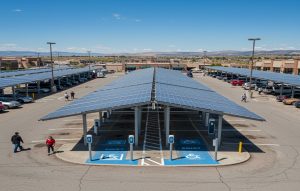
In Colorado, where sun exposure is high and parking lots are abundant, solar carports:
-
Turn unused space into energy-producing assets
-
Improve the customer experience year-round
-
Reduce reliance on grid electricity during peak hours
Multifamily Properties in Colorado Are Feeling the Pressure
Colorado renters increasingly expect EV charging.
According to state and regional housing and energy studies:
-
EV charging is now viewed as a premium amenity
-
Renters are more likely to choose properties with charging access
-
Properties with chargers see higher tenant satisfaction and retention
When solar offsets charging energy, property owners can:
-
Offer EV charging without increasing operating costs
-
Avoid passing volatile utility costs onto tenants
-
Increase long-term property value
For multifamily owners along the Front Range, this is quickly becoming a must-have, not a differentiator.
Colorado Incentives Strengthen the ROI
Colorado offers some of the strongest clean energy incentives in the country:
-
30% Federal Investment Tax Credit (ITC)
-
Accelerated depreciation (MACRS) for commercial systems
-
Colorado sales tax exemption on solar equipment
-
Property tax exemption for renewable energy systems
-
State grants covering a significant portion of charger installation costs
-
Federal Section 30C tax credit (up to 30%)
-
Utility programs supporting managed charging
Stacked together, these incentives significantly shorten payback periods for Colorado businesses.
Why Colorado Businesses Are Moving Now
Colorado is at the intersection of:
-
Rapid EV adoption
-
Rising utility costs
-
Strong solar production
-
Supportive state policy
Businesses that act now benefit from:
-
Increased customer traffic and tenant demand
-
Lower and more predictable energy costs
-
Protection from future rate hikes
-
A future-ready property that stays competitive
Final Takeaway
In Colorado, EV charging attracts people.
Solar controls the cost.
Together, they create a smarter, more profitable energy strategy.
At Apollo Energy, we design Colorado-specific solar + EV charging solutions for retail, multifamily, and commercial properties—with ROI as the priority.