Too small and you're still paying Xcel. Too large and you overspend. Here's how Denver homeowners get the number right from day one.
Divide your annual kWh usage by 1,500 to get your approximate system size in kilowatts. A typical Denver home using 9,000 kWh per year needs about a 6 kW system, or 14 to 16 panels. Denver's 5.5 peak sun hours per day give you more production per panel than most of the country, which means you need fewer panels to offset the same amount of electricity.
If you're a Denver homeowner thinking about going solar, one of the first questions you'll run into is system size. Too small and you're still paying Xcel Energy for a chunk of your electricity. Too large and you're spending money you didn't need to. Getting it right means understanding your energy usage, your roof, and how Denver's 300 days of sunshine translate into actual kilowatt-hours.
The single most important number in solar sizing is your annual electricity usage. You can find this on your Xcel Energy bill or in your My Xcel Energy online account, which shows monthly and yearly kWh consumption.
The average Denver home uses roughly 7,300 to 8,500 kWh per year, though larger homes with electric heating or EV chargers can easily hit 12,000 kWh or more. Pull your last 12 months of usage to get a complete picture. Seasonal swings matter. You'll use more electricity in summer if you run air conditioning and more in winter if you have electric heat.
Denver averages about 5.5 peak sun hours per day. That's among the best in the country and significantly higher than cities like Chicago, Seattle, or New York. Those peak sun hours are what determine how much energy each kilowatt of solar capacity produces over the course of a year.
In practical terms, a 1 kW solar panel system in Denver produces approximately 1,500 kWh per year. So if your home uses 9,000 kWh annually, you'd need a 6 kW system to cover the full amount. That's roughly 14 to 16 panels depending on the wattage of the panels your installer uses.
According to the National Renewable Energy Laboratory's PVWatts Calculator, Denver's solar resource ranks in the top tier nationally. That means Colorado homeowners need fewer panels than most of the country to offset the same amount of electricity.
Your annual kWh usage and Denver's sun hours give you a baseline. But several other factors influence the final system design.
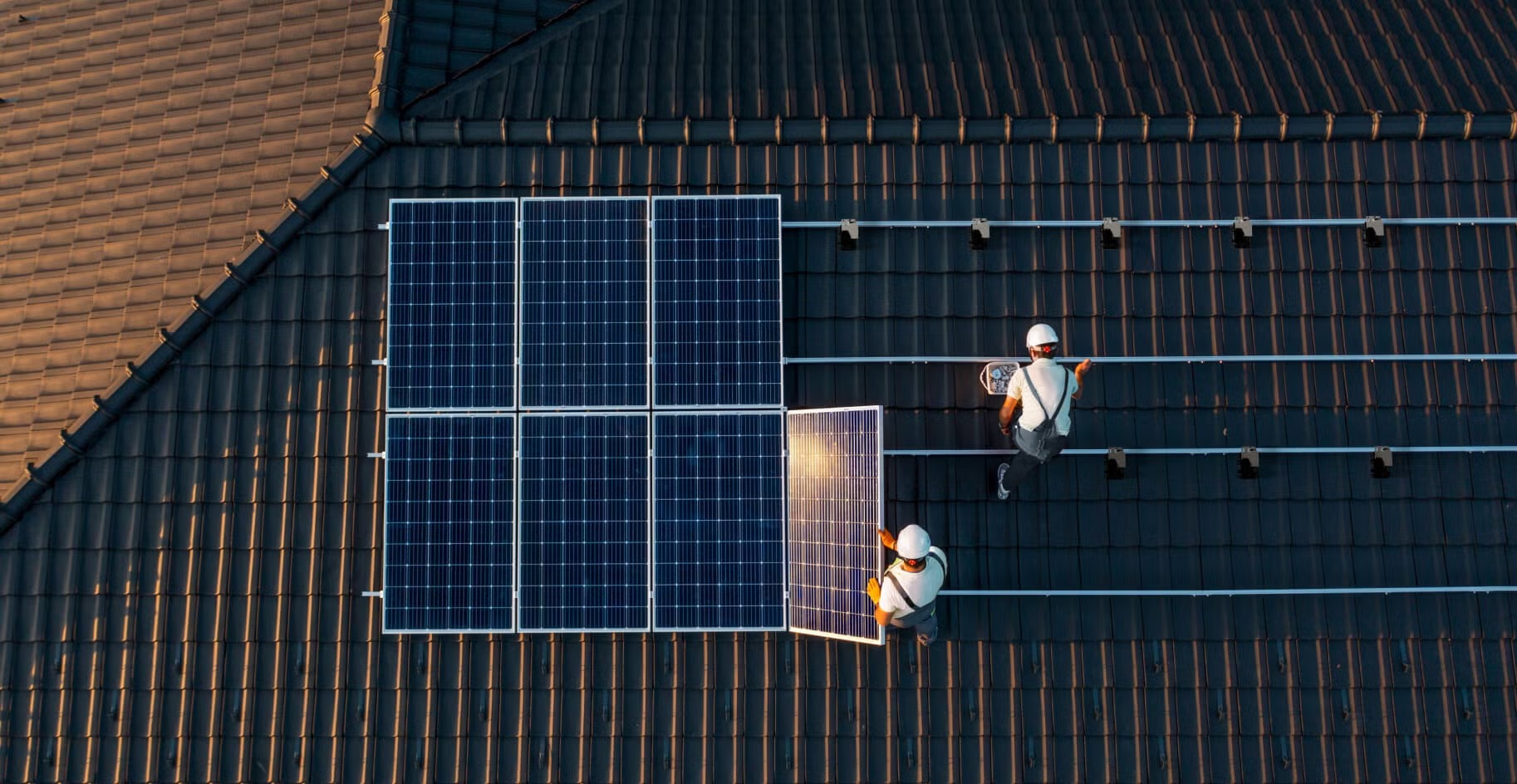
Roof orientation and pitch. South-facing roofs at a 30 to 35 degree angle produce the most energy in Denver. West-facing roofs still work well, especially for offsetting those expensive Xcel time-of-use peak hours in the afternoon. East-facing is usable. North-facing is generally not ideal.
Shading. Trees, chimneys, and neighboring structures can reduce panel output. A professional site assessment will identify any shading issues and adjust the design accordingly.
Future energy needs. If you plan to add an EV charger, a hot tub, or switch from gas to electric appliances, build that into your system size now. Adding panels later is possible but costs more than doing it right the first time.
Battery storage. If you're pairing solar with a home battery system, your installer may recommend slightly oversizing the array. This lets you charge the battery during the day and use stored energy during Xcel's peak rate hours from 2 to 6 PM in summer.
Planning to add an EV? A single Level 2 EV charger can add 3,000 to 4,000 kWh per year to your home's usage. If an EV is in your near-term plans, size your solar system to cover that load now rather than paying to add panels later.
Here's a simple way to estimate your system size: take your annual electricity usage in kWh and divide by 1,500. That gives you the approximate system size in kilowatts.
For example, a home using 10,500 kWh per year would need about a 7 kW system. At today's panel efficiencies, that's roughly 16 to 18 panels on your roof.
This formula assumes a south-facing roof with minimal shading. Your actual system design may differ based on your specific property. That's why a professional assessment matters.
Colorado's net metering policy through Xcel Energy credits you at the full retail rate for excess solar energy you send to the grid. That means a slightly oversized system in spring and fall generates credits you can use during higher-usage summer months.
With Xcel filing for another 9.9% rate increase in 2026, every kWh your system produces becomes more valuable over time. A system sized at 100% to 110% of your current usage gives you a comfortable buffer as rates continue to climb.
We'll review your Xcel bills, evaluate your roof, and design a system sized to maximize your savings.