Contact us for a complimentary energy audit

Colorado power shutoffs affected 18,000 homes in March 2026 alone. Here is what actually works, what it costs, and how to cut 30–40% off the price with stacked incentives.
On March 14, 2026, Xcel Energy intentionally cut power to 18,000 homes in Boulder and Jefferson counties to prevent wildfires. It was the second major Public Safety Power Shutoff in three months. Whole home battery backup is the only solution that keeps your lights, refrigerator, and medical equipment running when that happens again.
Xcel activated the March 2026 shutoff to reduce wildfire risk during extreme wind conditions. By 4:30 that afternoon, nearly 11,600 Boulder County customers sat in the dark. Some waited hours. Others lost power well into the evening.
This was the second major shutoff in three months. In January, 9,000 customers in Larimer and Weld counties experienced the same thing during Red Flag conditions with gusts reaching 65 mph.
Xcel adopted this policy after the Marshall Fire in December 2021, which destroyed more than 1,000 homes across Superior and Louisville. Xcel paid $640 million in compensation. Since then, they have expanded the PSPS program across the Front Range, while also announcing a $1.85 billion grid hardening investment that will take years to complete. In the meantime, Colorado homeowners are on their own when the power goes out.
A Public Safety Power Shutoff, or PSPS, is when a utility intentionally de-energizes power lines during high wildfire risk conditions. The goal is to prevent downed or arcing lines from igniting fires in dry, windy weather.
The Colorado Public Utilities Commission is drafting permanent rules governing when and how utilities can shut off power. Meanwhile, Xcel has made clear that shutoffs will continue, and potentially increase in frequency, as Colorado's wildfire seasons grow longer and more severe.
If you live in a Tier 2 or Tier 3 wildfire risk zone in Boulder, Jefferson, Larimer, Weld, or Douglas counties, your home is in a high PSPS probability area. Battery backup is your most reliable protection.
A home battery system stores electricity in a lithium-ion battery pack installed in your garage, basement, or on an exterior wall. When the grid goes down, the battery kicks in automatically. No delay. No fumbling with a generator. No extension cords through your house.
The battery powers your home's electrical panel directly, which means your lights, refrigerator, internet router, medical equipment, HVAC system, and other essentials keep running as if nothing happened.
When paired with solar panels, the system becomes even more powerful. During a daytime outage, your solar array recharges the battery while simultaneously powering your home, creating a cycle that can keep your home running indefinitely as long as there is sunlight. Without solar, a fully charged battery provides 10 to 20 hours of backup depending on your usage and system size.
Automatic standby generators that start on their own cost $15,000 to $25,000 installed, and they still require fuel, produce emissions, and need regular maintenance. For Colorado families in wildfire-prone areas, the absence of combustion near the home is an added safety benefit that batteries provide by default.
The cost of a home battery system depends on how much backup capacity you need. Here is a general breakdown for Colorado in 2026.
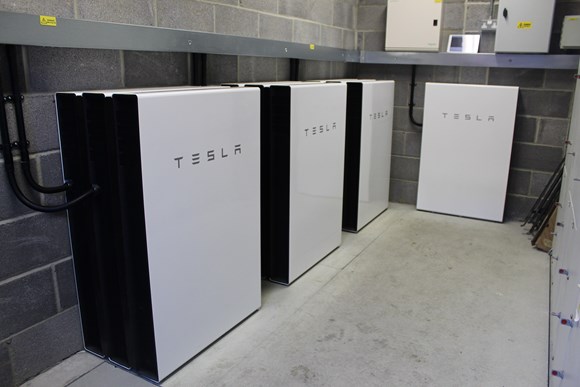
A single battery unit like the Tesla Powerwall 3 costs between $15,000 and $19,000 (before incentives), providing approximately 13.5 kWh of usable storage, enough to run essential loads for 10 to 12 hours during an outage.
For true whole home backup covering your HVAC system, kitchen appliances, and higher-draw loads, most families install two battery units. A two-battery system runs between $22,000 and $28,000 before incentives. The good news is that Colorado is one of the best states in the country for stacking battery storage incentives.
Colorado homeowners can combine federal, state, and utility incentives to reduce the upfront cost of battery storage by 30% to 40% or more. Here is what is available in 2026.
Apollo Energy has finance companies that allow for an upfront Tax Credit of up to 25%. This reduces your upfront cost and allows you to own the system free and clear at no additional cost.
Colorado offers an additional 10% state income tax credit on qualifying residential energy storage systems. This credit is available through tax year 2026. On a $24,000 system, that is another $2,400 in savings. See the Colorado Energy Office for qualification details.
Xcel's rebate program provides up to $5,000 in upfront incentives for qualifying battery installations. The program paused in February 2026 after high demand exhausted initial funding, but Xcel has indicated it may reopen mid-2026. There is also an additional $500 over five years for customers who enroll in Xcel's battery participation program.
If you or a family member relies on electricity-powered medical equipment and you live in a Tier 2 or Tier 3 wildfire risk zone, Xcel offers up to $10,000 toward battery installation through their Medical Certification Program. This is one of the most underutilized incentives in Colorado.
When you stack the federal and state tax credits alone on a $24,000 system, your net cost drops to approximately $14,400. If the Xcel rebate reopens mid-2026, that number falls below $10,000. Apollo Energy handles all incentive activation as part of every installation. See our full Colorado solar incentives guide for everything available in 2026.
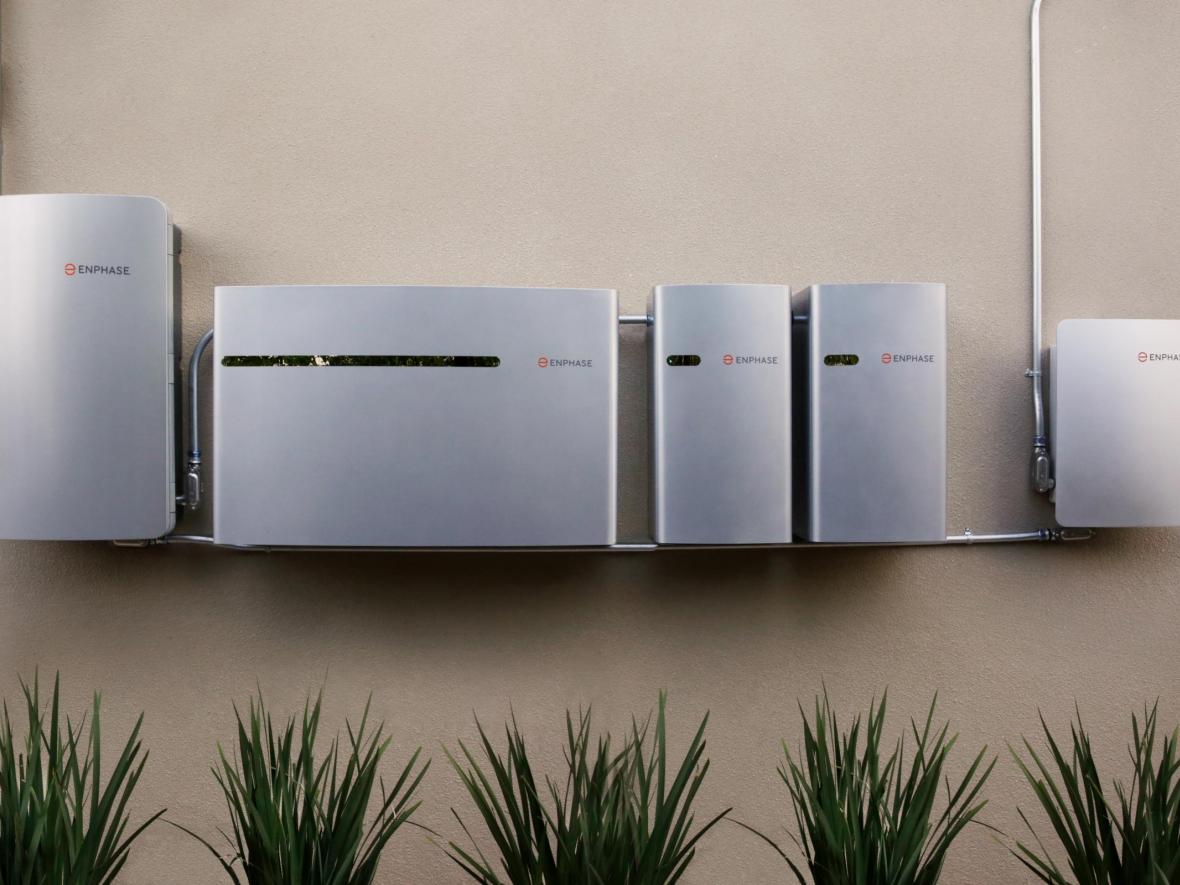
The two most popular residential battery systems installed along the Front Range are the Tesla Powerwall 3 and the FranklinWH aPower 2. Both qualify for all available federal, state, and Xcel incentives.
The Tesla Powerwall 3 is a single integrated unit combining battery and inverter. It offers 13.5 kWh of storage, a continuous output of 11.5 kW, and seamless integration with Tesla solar panels and the Tesla app. It handles whole home backup well for moderate-usage homes and is one of the more cost-effective options per kWh. Best for new solar and battery installations.
The FranklinWH aPower 2 uses a modular design with a central aGate controller and 15 kWh battery modules. It is AC-coupled, meaning it works with any existing solar inverter, making it the preferred choice for homeowners who already have solar panels. It also offers generator integration and advanced load management. Best for homes with existing solar or anyone who wants a longer warranty and LFP battery chemistry.
For a full side-by-side comparison of both systems, see our Powerwall 3 vs FranklinWH aPower 2 comparison guide.
Battery backup is not just about power outages. It also saves you money every single month on your electricity bill.
Since November 2025, all Xcel residential customers in Colorado are on time-of-use rates. That means electricity costs 2.7 times more during peak hours between 5 PM and 9 PM on weekday evenings.
A battery charged by solar during the day can discharge stored energy during those peak hours, so you avoid buying the most expensive grid electricity. This can save $600 to $1,200 per year on your electric bill, and over the 10 to 15 year warranty period of most systems, that adds up to $6,000 to $18,000. When combined with the upfront incentives, the battery essentially pays for itself while also providing backup protection.
Front Range homeownersBoulder, Jefferson, Larimer, and Weld county residents where PSPS events are now routine.
Medical equipment usersIf someone in your home depends on a CPAP, oxygen concentrator, or home dialysis unit, power loss is a health risk, not an inconvenience.
Work-from-home professionalsYou cannot afford to lose internet, your computer, or phone charging capability for hours at a time.
Existing solar homeownersStore excess energy instead of sending it back to the grid at low net metering rates. Maximize your solar ROI.
EV owners and plannersManage home energy, EV charging, and backup power from a single integrated platform.
High electricity bill householdsTime-of-use rates make battery storage a smart financial move even without outages factored in.
The first step is understanding your home's energy profile. How much electricity do you use during a typical day? Which circuits are critical during an outage? Do you have existing solar or are you starting from scratch?
Apollo Energy provides free consultations for Colorado homeowners considering battery backup, solar, or both. Our team handles system design, permitting, installation, and activation of all available rebates and tax credits so you do not leave money on the table.
With power shutoffs increasing, electricity prices rising, and incentive programs at risk of running out of funding, 2026 is the strongest year yet to invest in battery backup for your Colorado home.
We handle everything, system design, permitting, installation, and every available incentive so you do not leave money on the table.