Contact us for a complimentary energy audit

Net metering is the single biggest reason residential solar pencils out financially in Colorado. Here is exactly how it works, what Xcel credits you, and why rising rates make it more valuable every year.
Colorado law requires Xcel Energy to credit you at the full retail rate for every kilowatt-hour your solar panels export to the grid. Credits roll forward automatically each month and can be cashed out annually. As Xcel rates rise, your credits become more valuable, not less.

If you are an Xcel Energy customer considering solar, understanding net metering will show you exactly where your savings come from. Colorado law requires investor-owned utilities like Xcel to offer net metering to customers with qualifying solar systems. The policy has been stable for years, and as of 2026 it remains one of the strongest in the country.
Net metering is a billing arrangement between you and your utility. When your solar panels produce more electricity than your home uses at any given moment, the excess flows back to the grid. Your electric meter spins backward, and Xcel Energy credits your account for that energy.
The key detail that makes Colorado net metering so valuable is the credit rate. Xcel credits you at the full retail rate for every kilowatt-hour you export. The solar energy you send to the grid is worth exactly the same as the electricity you buy from Xcel. Not a discounted wholesale rate. Not a fraction. Full retail value.
Some states have moved to reduce net metering credits in recent years, pushing solar customers onto less favorable rate structures. Colorado has held firm. For homeowners on the Front Range, this policy is a major financial advantage that directly impacts your solar payback period.
Colorado is one of a shrinking number of states still offering full retail rate net metering. States like California, Nevada, and Hawaii have already shifted to reduced credit structures. Colorado's policy is valuable, and it makes sense to lock in solar while it is intact.
During peak sun hours, your panels typically produce more than your home needs. That excess flows onto the Xcel grid automatically.
Xcel's bidirectional meter tracks what you export. You receive a credit at the full retail electricity rate, the same price you pay to buy power.
Spring and fall typically produce more credits than you use. Those surplus credits roll forward to the next billing cycle automatically.
At the end of each calendar year, you can bank remaining credits indefinitely or request a cash payout at Xcel's average hourly incremental cost rate.
Most solar homeowners choose to bank their credits rather than cash out. Credits earned during high-production months like April, May, and June offset the higher electricity usage during summer AC season and the shorter days of winter. A well-sized system essentially zeroes out your annual bill.
For a typical Colorado home exporting 3,000 kWh per year, the difference between full retail net metering and a wholesale-only credit structure is roughly $330 per year in lost savings. Over a 25-year panel warranty period, that gap compounds to over $8,000. Colorado's policy is genuinely worth protecting and a real reason to go solar now while it holds.
Xcel Energy allows net metered solar systems sized up to 200% of your annual electricity usage. For the vast majority of homeowners, that cap is more than generous. A system sized to cover 100% to 110% of your annual consumption hits the sweet spot between maximizing savings and avoiding unnecessary equipment costs.
If you are planning to add an EV charger, switch from a gas furnace to a heat pump, or build an addition, factor that future electricity demand into your system size now. Colorado's net metering policy gives you room to build a system that grows with your needs.
| System Size | Typical Use Case | Net Metering Strategy |
|---|---|---|
| 100% of usage | Current home with stable energy use | Near-zero annual bill, credits bank over winter |
| 110–130% of usage | Adding EV or heat pump in next 1–2 years | Best overall value ✓ |
| 150–200% of usage | Large future expansion, battery storage | Maximum credits, battery recommended to avoid over-export |
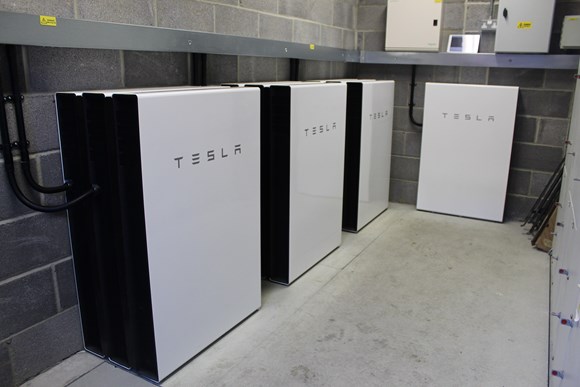
In addition to net metering, Xcel now runs the Renewable Battery Connect program, a virtual power plant initiative that pairs with your home battery system. If you install a Tesla Powerwall or another qualifying battery alongside your solar panels, you can enroll and earn additional incentives.
Xcel offers up to $500 per kilowatt of battery storage, covering up to 50% of equipment cost. Low-income qualifying customers can receive up to $800 per kilowatt. Participants also earn a $100 annual incentive for five years. The program allows Xcel to briefly draw stored energy from your battery during peak demand events, but you keep full control of backup power for outages.
It is a clear-cut way to stack savings on top of your net metering credits. For a full breakdown of available incentives, see our complete Colorado solar incentives guide for 2026.
The Renewable Battery Connect rebate fund closed in February 2026 after high demand, but Xcel has signaled it may reopen mid-year. Battery storage is worth installing regardless, and the net metering + time-of-use savings alone make the math work. See our whole home battery backup guide for the full picture.
Xcel Energy has filed for a rate increase of nearly 10% in 2026 with the Colorado Public Utilities Commission. That follows years of steady increases that have pushed the average residential rate well above national averages.
Here is the part most people miss: every time Xcel raises its rates, the value of your net metering credits goes up too. The electricity your panels produce today offsets power at today's retail rate. Next year, when rates are higher, those same panels offset power at the new, higher rate.
Your solar system becomes more valuable every single year you own it. Over a 25-year panel warranty period, that compounding effect is significant, and it means the true financial benefit of going solar in Colorado is consistently understated at the time of purchase. For more on how rate increases affect your solar ROI, see our Xcel rate increase breakdown.
Net metering policy can change. Colorado has held full retail net metering longer than most states, but there is no guarantee it stays in place permanently. Homeowners who go solar now lock in the current policy for the life of their system. Waiting carries regulatory risk on top of paying higher electricity bills in the meantime.
Net metering is the foundation of residential solar economics in Colorado, and right now the policy is as strong as it has ever been. Paired with the up to 25% federal solar incentive, battery storage options, and Xcel's rising rates, there is a clear financial case for going solar in 2026.
Apollo Energy designs every system to maximize your net metering value based on your actual Xcel usage history, your roof's production potential, and your energy goals including future EV charging or HVAC upgrades. We size every installation to hit the sweet spot, not oversized to generate paper credits you can not use, and not undersized to leave savings on the table.
We design every system around your actual Xcel usage data to maximize your net metering value. Use our instant estimate tool or talk to our team for a custom quote.