Contact us for a complimentary energy audit

Both can keep your lights on during an Xcel Energy outage. Both qualify for Colorado incentives. But they are built for different situations, and picking the wrong one could cost you thousands.
Choose the Powerwall 3 if you are starting fresh with new solar. Choose the FranklinWH aPower 2 if you already have solar, need generator integration, or prefer a longer warranty and safer battery chemistry. Both are excellent, but they serve different homeowners.
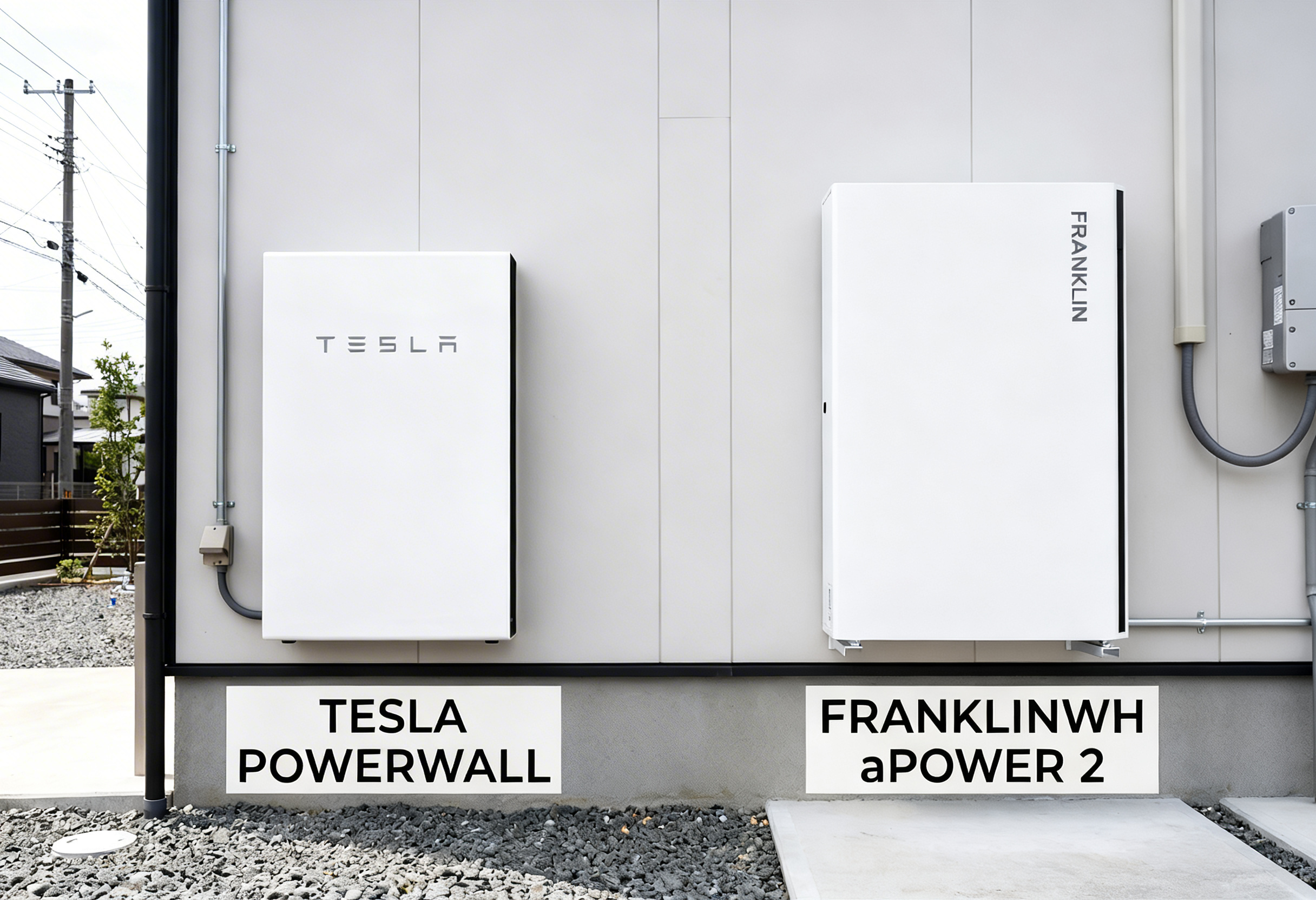
If you are shopping for a home battery in Colorado, two names keep coming up: the Tesla Powerwall 3 and the FranklinWH aPower 2. Both can keep your lights on during an Xcel outage. Both qualify for available Colorado solar incentives. But they are built for different situations. Here is how they compare for Colorado homeowners in 2026.
| Spec | Tesla Powerwall 3 | FranklinWH aPower 2 |
|---|---|---|
| Usable capacity | 13.5 kWh | 15 kWh ✓ |
| Continuous power | 11.5 kW ✓ | 10 kW (15 kW peak) |
| Battery chemistry | NMC (lithium nickel) | LFP (lithium iron) ✓ |
| Built-in inverter | Yes, 6 MPPTs ✓ | No (uses aGate controller) |
| Existing solar compatible | Limited (DC-coupled) | Yes, any inverter ✓ |
| Generator integration | No | Yes ✓ |
| Warranty | 10 years, 70% capacity | 15 years, 70% capacity ✓ |
| Installed cost (single unit) | $14,000–$17,500 ✓ | $17,000–$20,000 |
| Federal incentive eligible | Yes (with solar) ✓ | Yes (with solar) ✓ |
This is where the two batteries diverge sharply, and it is the most important factor for most Colorado homeowners.
For Colorado homeowners who went solar a few years ago and now want backup power, the FranklinWH is typically the easier and more cost-effective path. For brand new solar and battery installations, the Powerwall 3 offers a streamlined, all-in-one solution. See our battery installation services for more on sizing and pairing options.
Tesla backs the Powerwall 3 with a 10-year warranty guaranteeing at least 70% capacity retention. That is standard for the industry.
FranklinWH offers a 15-year warranty with the same 70% capacity guarantee. That is five extra years of coverage, which matters when you are making a $15,000+ investment. The LFP chemistry in the aPower 2 also tends to degrade more slowly than the NMC chemistry in the Powerwall 3, so real-world performance beyond the warranty period should favor the FranklinWH.

Installed pricing for the Powerwall 3 in Colorado typically falls between $14,000 and $17,500 for a single unit, depending on electrical complexity and permitting. Tesla occasionally runs promotional pricing, though availability varies.
The FranklinWH aPower 2 installed with the required aGate controller runs approximately $17,000 to $20,000 for a single battery system. The aGate adds cost upfront, but it also adds load management and generator integration that the Powerwall 3 does not offer.
Both systems qualify for the up to 25% federal Residential Clean Energy Credit when paired with solar, which brings the effective cost down significantly. Colorado also offers a state tax credit worth up to 10% on qualifying battery storage. For a full breakdown of what you can claim, see our complete guide to Colorado solar incentives in 2026.
Xcel Energy's Renewable Battery Connect program offered up to $5,000 in rebates, but that fund closed in February 2026 and may reopen mid-year. Check with the Colorado Public Utilities Commission for the latest on expanded battery incentive programs. Either way, the federal credit makes both systems significantly more affordable than the sticker price suggests. Read our Xcel rate hike breakdown for context on why battery storage ROI is improving.
You are starting fresh with a new solar and battery installation, want the simplest all-in-one system at a lower upfront cost, and do not need generator integration. Best for new installs on the Front Range where you want one box handling everything.
You already have solar panels, want a longer 15-year warranty, need to integrate a generator, or prefer LFP battery chemistry for added safety and longevity. Best for Colorado homeowners who went solar 2–5 years ago and want to add backup without replacing their existing equipment.
Both are excellent batteries. The right choice depends on your home, your existing equipment, and your priorities. Colorado's grid is becoming less predictable as demand increases and extreme weather events intensify, and either system will give you the energy independence to stop worrying about the next outage.
For most Denver metro homeowners adding solar and battery at the same time, the Powerwall 3 pencils out better. For homeowners with existing panels, the FranklinWH aPower 2 is the cleaner installation and the better long-term investment. Not sure which fits your situation? Use our free solar savings calculator or contact Apollo Energy for a custom quote.
We install both the Powerwall 3 and FranklinWH aPower 2. We'll walk you through which one makes sense for your setup, your existing equipment, and your budget.