Contact us for a complimentary energy audit

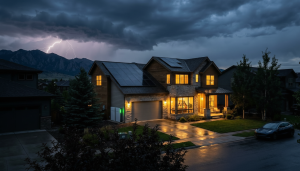
From the Marshall Fire that left thousands without power, to recent wildfire-related shutoffs, to the December 2024 bomb cyclone that caused widespread outages, homeowners across the state are seeing how fragile the grid can be.
At the same time, utilities like Xcel Energy continue raising electricity rates, often 6–10% annually in recent years, putting even more pressure on homeowners.
So the question becomes simple:
What happens when the grid goes down, and how do you stay powered?
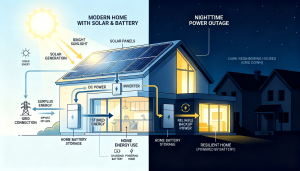
When you add a battery, your system becomes self-sufficient.
Here’s what happens:
No manual switching. No interruption.
One of the most common systems homeowners choose is the Tesla Powerwall.
It can power essential appliances like:
Depending on your setup, your battery can keep critical parts of your home running for hours, or even longer when paired with solar recharging during the day.
Let’s make this real.
A single battery can typically power:
👉 That’s roughly 500–1,500 watts of continuous usage
With a 13.5 kWh battery:
If you try to run everything (AC, oven, etc.), runtime drops fast.
That’s why system design matters more than the battery itself.
Battery storage is quickly becoming a popular upgrade.
Backup power during outages
More energy independence
Better control over electricity use
The U.S. Energy Information Administration (EIA) reports increasing electricity demand and grid pressure nationwide, which contributes to higher risk of outages.
With rising demand and grid strain, having backup power is becoming a smart move, not just a luxury.
(Varies based on install complexity and system design)
But here’s what makes it more accessible:
Homeowners can currently qualify for up to 25% federal incentives on solar + battery systems.
Example:
This reduces your upfront cost significantly.
And most important: this incentive won’t last forever.
As policies change, these credits are expected to decrease over time.
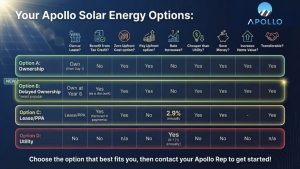
Most people think solar is one option. It’s not.
The way you choose to go solar impacts your savings, flexibility, and long-term value.
Not all systems perform the same.
A well-designed setup should:
Match your energy usage
Prioritize essential appliances
Account for local weather conditions
This ensures your system works when you actually need it.
Most solar companies will give you a quote.
We do something different.
At Apollo Energy, we’ll model your home’s actual energy usage and show you:
So you know exactly what to expect, before you spend a dollar.
👉 Get your custom system breakdown
👉 See how long your battery keeps your home powered