Contact us for a complimentary energy audit

Xcel Energy's Renewable Battery Connect program pays homeowners up to $5,000 for sharing battery power during peak demand. Here's how it works, what you earn, and how to get in position for the next funding round.
Xcel Energy pays Colorado homeowners $350 per kilowatt of battery capacity to enroll in its Virtual Power Plant program, plus a $100 annual incentive for five years. A Tesla Powerwall 3 earns over $4,000 upfront. The current funding cycle closed in February 2026 but Xcel expects to reopen mid-year. Only Tesla Powerwall and Enphase batteries qualify, and they must be paired with solar.
A Virtual Power Plant isn't a physical facility. It's a network of home batteries that Xcel Energy can draw from when electricity demand spikes across Colorado. On the hottest summer afternoons or during extreme cold snaps, Xcel sends a signal to enrolled batteries asking them to discharge stored energy back to the grid. Your battery helps reduce strain on the power system, and Xcel compensates you for it.
The technology behind it relies on smart software from Itron that coordinates charging and discharging schedules across thousands of homes. You don't have to do anything manually. Your battery charges from your solar panels during the day and shares a portion of its stored power when the grid needs it most.
Your home stays protected throughout. Xcel only draws from your battery during grid events, and you keep enough reserve to power your own home if the lights go out.
During daylight hours your panels fill the battery. Itron's software tracks charge levels across all enrolled homes in real time.
On peak demand days, Xcel sends an automated signal to enrolled batteries. No action required on your part.
Your battery exports stored power during the event. Your home backup reserve is protected throughout.
Upfront incentive paid at enrollment, plus $100 annually for five years. Stacks with all other solar and battery incentives.
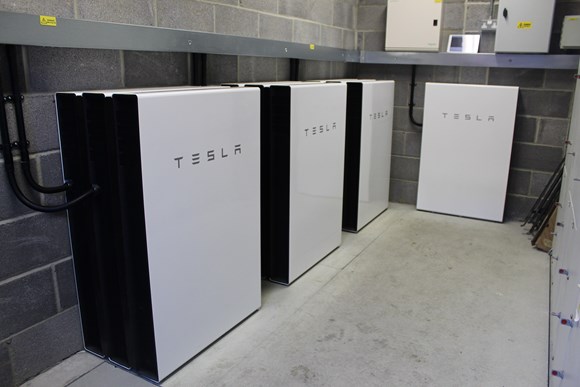
The financial incentive is straightforward. Enrolled homeowners receive a one-time payment of $350 per kilowatt of battery capacity. For a typical Tesla Powerwall 3 with 11.5 kW of continuous power, that works out to over $4,000 upfront. Low-income qualifying customers receive up to $800 per kilowatt, nearly doubling the payout.
On top of the upfront payment, Xcel sends a $100 annual participation incentive for five years — another $500 over the life of the agreement.
| Battery System | Capacity | Standard Payout | Low-Income Payout |
|---|---|---|---|
| Tesla Powerwall 3 | 11.5 kW | ~$4,025 | ~$9,200 |
| Enphase IQ Battery 5P | 3.84 kW | ~$1,344 | ~$3,072 |
| Annual incentive (5 yrs) | Any size | +$500 total | +$500 total |
These payments stack with other incentives. Colorado's battery storage tax credit and the federal clean energy ITC of up to 25% can all apply to the same installation. When combined, the out-of-pocket cost for a home battery drops significantly below sticker price.

Not every battery system is eligible. Xcel's Virtual Power Plant program currently approves two brands: Tesla Powerwall and Enphase. If you're shopping for a home battery and want to qualify for the program, those are your options right now.
The battery must also be paired with a solar panel system and connected to Xcel's monitoring platform. Standalone batteries without solar don't qualify. If you already have solar panels on your roof and are considering adding storage, this program gives you a strong financial reason to move forward.
11.5 kW continuous power, 13.5 kWh usable capacity. Apollo Energy's most popular VPP-eligible battery. Earns over $4,000 upfront.
Modular design, pairs with Enphase microinverters. Smaller per-unit payout but scalable if you stack multiple units.
Standalone batteries without a solar panel system do not qualify for Renewable Battery Connect enrollment.
Battery must be interconnected to Xcel's monitoring platform. Apollo handles all permitting and interconnection paperwork.
The Renewable Battery Connect program ran through its 2025 budget quickly, and the current funding cycle closed in February 2026. Xcel Energy has indicated the program may reopen with new funding in mid-2026.
That doesn't mean you should wait to plan. Battery installations in the Denver metro area typically take six to ten weeks from contract to commissioning. If you start the process now, your system could be installed and ready to enroll as soon as the next funding round opens. Waiting until the announcement means competing with a rush of applications.
Xcel's $79 million total program budget signals how seriously they're investing in distributed energy. Nearly 2,000 batteries have already been installed under the program, contributing over 15 megawatts of managed capacity to the Colorado grid.
The rebate fund is competitive and closes fast. Homeowners who install now and are ready to enroll at reopening are in the strongest position. Those who wait until the announcement often find the fund exhausted within weeks.
Colorado electricity rates have climbed steadily, and Xcel's most recent rate increase hit residential customers hard. A solar and battery system already protects you from rising rates by reducing what you pull from the grid. The Virtual Power Plant program adds another revenue stream on top of those savings.
Denver's 300 days of sunshine generate plenty of solar energy to charge your battery during the day. Between the upfront VPP payment, annual incentives, net metering bill savings, and backup power during outages, a home battery system in Colorado now pays for itself faster than at any point in the program's history.
The Colorado Energy Office continues to expand programs that reward clean energy adoption, and Xcel's VPP is one of the most direct ways to benefit from that momentum.
For a full breakdown of every available battery and solar incentive in Colorado right now, see our complete Colorado solar incentives guide for 2026.
Apollo Energy installs Tesla Powerwall, Enphase, and other qualifying battery storage systems across the Denver metro area. We handle permitting, installation, and Xcel interconnection so you're ready to enroll as soon as the next funding round opens. The process takes six to ten weeks from contract to commissioning, so the time to start is now, not when the announcement drops.
Installation takes 6 to 10 weeks. Start now and be ready to enroll in Xcel's Virtual Power Plant the day the fund reopens.